

From early-season setbacks to relentless development behind the scenes, OrangeCat Racing’s Super Hooligan team racing the Lightfighter will close the 2026 MotoAmerica season looking ahead to a stronger future.
FOR IMMEDIATE RELEASE
OrangeCat Racing | September 8th, 2026
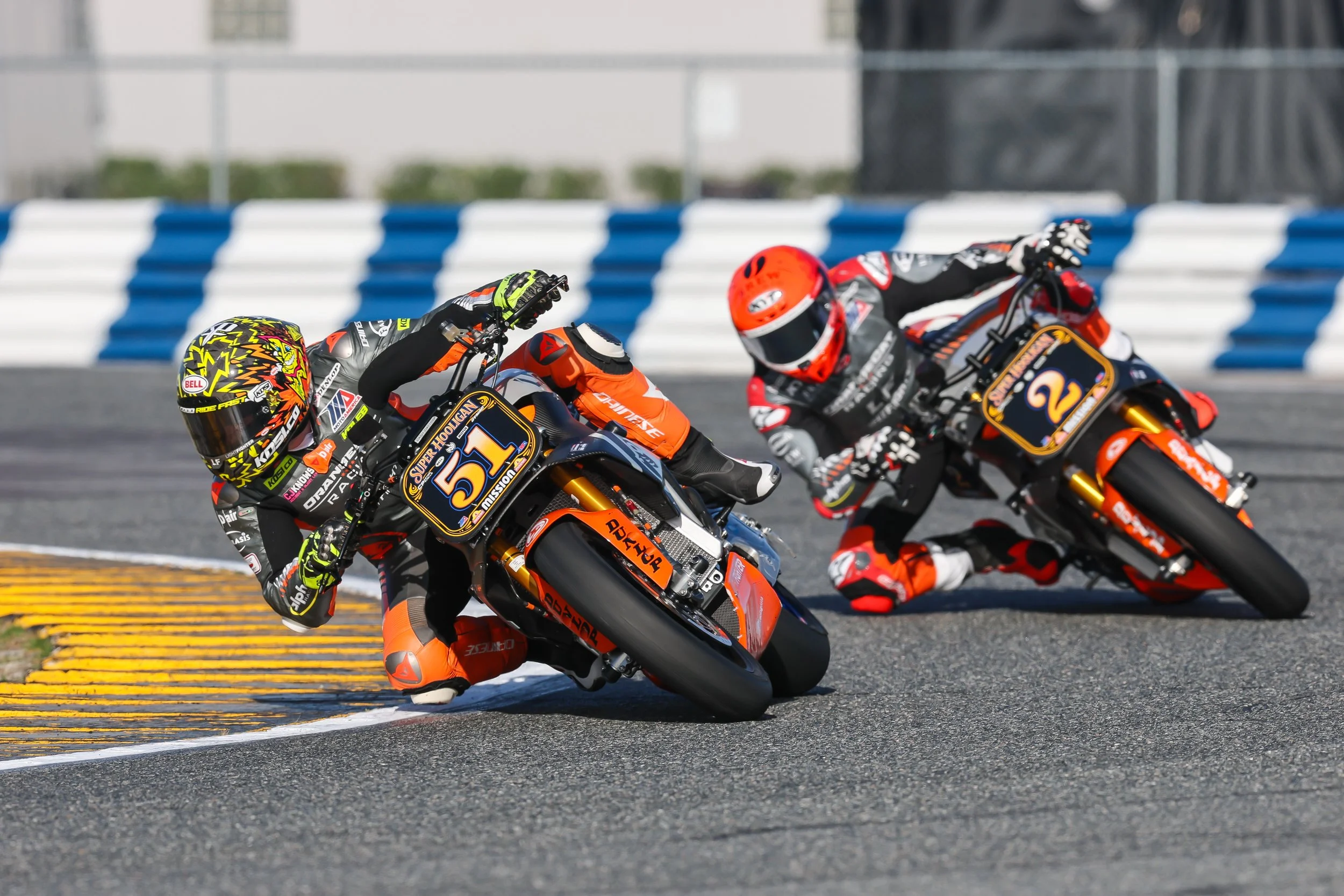
Photo credit: Brian J. Nelson
CHICAGO, Illinois – After a season of big strides, hard lessons, and determination, the OCR Lightfighter program has come a long way in 2026. We pushed hard to have our package ready for one final showdown at COTA but ultimately decided it’s best to end our season early and put our full focus into 2027.
Competing with an electric motorcycle against some of the most established machines in the Super Hooligan National Championship meant taking on a challenge few teams have attempted. It required pushing new technology to its limits, learning quickly, and accepting that progress would not always come in a straight line.
This season proved exactly that.
An Early Start: From Setback to Podiums
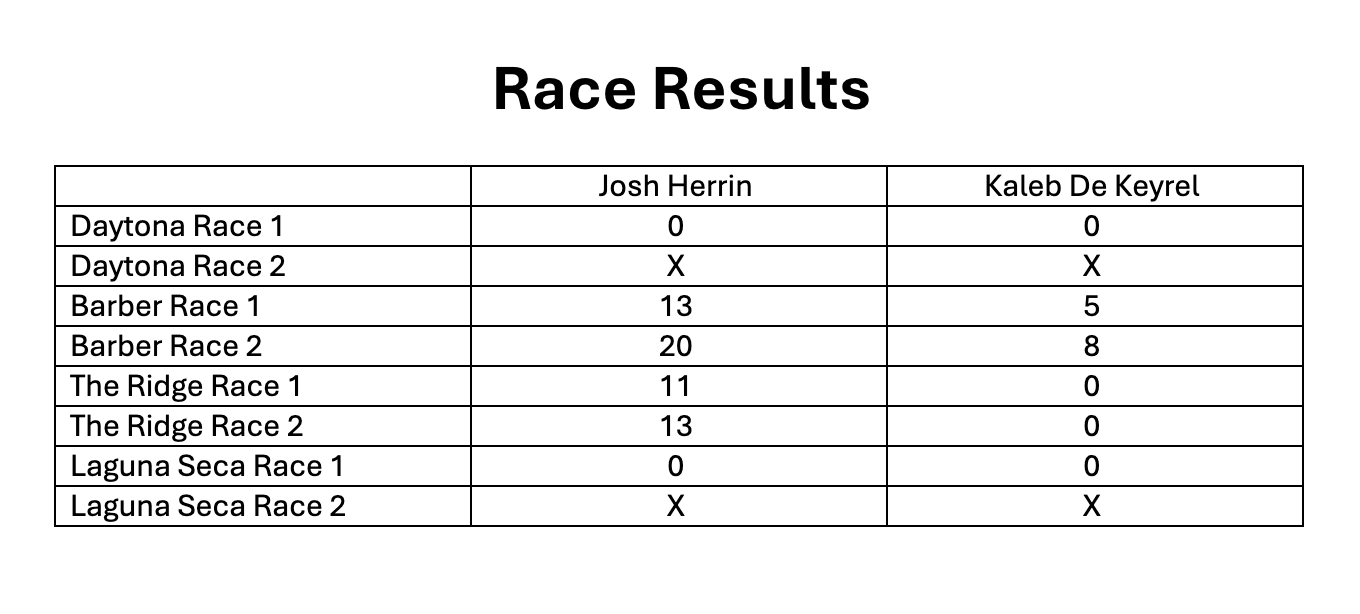
What was intended to be the start of another exciting chapter for the Lightfighter program instead became an early reminder of just how demanding developing a new racing platform can be. Following a detailed review of data collected from the two race bikes, we felt that it was not worth pushing the platform beyond its current technical limits to be competitive. Rather than allowing Daytona to define the season, the team returned home determined to learn from it.
At Barber Motorsports Park, the team broke through after countless hours of development to improve our package resulting in Josh Herrin leading the Super Hooligan race at Barber Motorsports Park for three of the eight laps before finishing second place in what was the MotoAmerica racing debut for the electric bike. That success continued at The Ridge during race two for Herrin as he led laps three, four, and five, and was just .488 of a second from another podium. It was a major step forward for the program and a glimpse of the performance potential that continues to drive the team as we build toward the future.
Lessons From Laguna
We had a failure that led to a fire on Josh Herrin’s bike during the opening practice at the Laguna Seca round and subsequent withdrawal from that race weekend. Since that time, the Lightfighter team has been working very hard with the support of their partners to determine what went wrong in a concerted effort to prevent any future recurrence.
The stresses placed on these prototype battery cells during professional racing, especially on tracks like Daytona, led to a weakness in one or more cells. This caused a heavy imbalance from the surrounding cells, pushing them past their limits and causing a chain reaction of overheating.
With information learned from onboard data collection, the team developed new on-bike protection algorithms, and a more robust screening process prior to a race, Lightfighter can help detect and prevent these types of failure in the future.
One Final Push for COTA
As progress continued, the team turned its attention toward one final goal: returning to competition for the season finale at Circuit of The Americas.
Ultimately, however, the motorcycles weren't ready. After everything the team experienced this season, returning simply for the sake of returning was never the objective. OrangeCat Racing and Lightfighter remain committed to developing the platform methodically and ensuring that when the motorcycles return to the MotoAmerica paddock, they are ready to not only race but compete for podiums.
Looking Toward 2027
Our goal to compete head-to-head with some of the most mature combustion motorcycles in the racing paddock has not changed. Lightfighter’s focus on building a bike that aims to optimize weight, and handling means that the battery must be at the forefront of commercial energy and power density.
Lightfighter’s partnership with Farasis Energy has been crucial in the success we’ve seen thus far and are certain with their help in reviewing Lightfighter’s system design, we’ll have race battery packs that are not only safer, but increasingly competitive.
Lightfighter will continue pushing the boundaries of electric motorcycle technology and racing alongside all of us at OrangeCat Racing, building on everything we’ve learned and taking the next step forward together.
Kalbe De Keyrel / No. 51
Looking back, racing the Lightfighter V3 RH in the Super Hooligan class has been an incredible experience. I love working with the OrangeCat Racing team; it feels like family. We’ve learned a lot about the bike, continued to develop it throughout the season, and I’ve seen firsthand how much potential it has.
While it’s disappointing to miss COTA, I’m extremely excited to keep developing the Lightfighter V3 RH. I truly believe this bike has a lot of potential, and the work we’re putting in now is going to pay off for the races and seasons to come. I’m really looking forward to seeing how far we can take it.
F.A.Q.
What has Lightfighter changed or are going to change going into the 2027 season?
The primary focus will be on increasing the sensing and protections via software based on additional sensors within the battery. We’re also working hard on improving the thermal performance of our electric motor and gearbox (MGU) to deal with the heat introduced racing at higher speed tracks like Daytona and COTA.
Will Lightfighter participate in Super Hooligan next year?
Yes. That is the current plan.
What additional testing and safety measures are now in place?
We already have a functional algorithm and pre-race battery module screening to detect and prevent the incident that occurred at Laguna, but we’d like to ensure that we have not missed what the industry refers to as “corner cases” where some unpredicted variable pushes the system outside of tested boundaries. We can only simulate so much, the real tests must be performed through race simulations on a real track.
Why use racing to develop EV technology?
We believe the stresses encountered through competitive professional racing will allow us to develop this EV powertrain more rapidly than any testing alone. The event at Laguna was unfortunate, but it exposed a weakness and corner case in our assumptions that may have gone untested for years in a less aggressive environment or use cases. It’s hard work, but we’re committed to moving the technology forward to the benefit of performance enthusiasts everywhere.
What needs to happen before the bikes return to competition?
We have scheduled some private testing with our riders and have a detailed test plan to assess our readiness for competition.
Will the motorcycles be significantly different in 2027?
The motorcycles will not be significantly different.
How do the team and riders feel about the platform moving forward?
The team feels encouraged by the pace and results shown at the limited events we competed in this season and anxious to get back on track to moving the program forward.
How can you prevent what happened at Laguna Seca from happening again?
More sensors, better software algorithms, and pre-race screening will all be employed to prevent the failure that led to the event at Laguna Seca.
What caused the incident during Lightfighter’s testing at Laguna Seca?
During testing at Laguna Seca, one or more prototype battery cells became unstable under the extreme demands of racing, resulting in a fire. Fortunately, the bike’s data logger captured the incident, giving Lightfighter valuable information to better understand the cause and develop new safeguards designed to detect and prevent a similar issue in the future.
—
About OrangeCat Racing
OrangeCat Racing is a professional motorcycle racing team based in Chicago, competing at the national level in MotoAmerica. OrangeCat Racing thrives on competition, on challenging itself, and on learning and growing together. The team is dedicated to expanding the reach of motorcycle racing, sharing the experience of it, and creating an environment where riders can fully focus on their craft.
For 2026, OrangeCat Racing is competing for MotoAmerica’s Superbike class as a BMW Motorrad Motorsport official team. They’re also competing in the MotoAmerica Super Hooligan class aboard the electric Lightfighter motorcycle. For more information about OrangeCat Racing, visit www.orangecatracing.com.
OrangeCat Racing’s promotional and technical partners for the 2026 MotoAmerica season include BMW Motorrad Motorsport, Lightfighter, Motoworks Chicago, Ohlins USA, Farasis, and alpha Racing.